


Our Blogs

Implementing SAP Business One is a significant milestone for any organisation. It’s not just a software installation, but a complete transformation of how your business operates, collaborates, and grows. SAP Business One integrates all core business processes, including finance, sales, inventory, production, purchasing, and customer management, into a single, unified platform.
However, to unlock its full potential, you need a well-structured implementation process managed by experienced professionals. The success of SAP Business One largely depends on how effectively each phase of the implementation is planned and executed.
Here we explore the key phases of SAP Business One implementation, discuss the factors, and explain why partnering with Triz Technologies, a leading SAP Business One Partner in Kolkata, can ensure your ERP project’s success.
About SAP Business One Implementation
SAP Business One Implementation is the complete process of installing, configuring, customising, and deploying the SAP Business One ERP software for a business. It ensures that the system is set up according to the company’s workflows—such as finance, inventory, production, sales, and procurement—so the business can operate smoothly using one integrated platform.
SAP Business One implementation involves several steps: understanding business processes, planning the project, installing the system, customising workflows, migrating data, training users, testing, and going live. After launch, ongoing support ensures smooth operations. It is a complete SAP B1 setup that manages all business processes efficiently in a single platform.
10 Key Phases of SAP Business One Implementation
1. Project Preparation
This is the foundation stage where the roadmap for SAP Business One implementation is created.
Key Activities:
-
Define project scope, goals, and deliverables
-
Form a project team and assign responsibilities
-
Establish a budget, timeline, and resource plan
-
Conduct initial system readiness and infrastructure checks
2. Business Blueprinting
In this phase, the business processes are analysed and mapped to SAP Business One functionalities.
Key Activities:
-
Conduct workshops with stakeholders
-
Document current (AS-IS) and desired (TO-BE) processes
-
Identify process gaps and customisation requirements
-
Finalise functional and technical requirements
3. System Configuration
Based on the business blueprint, SAP Business One is configured to meet organisational needs.
Key Activities:
-
Set up company databases, chart of accounts, and master data
-
Configure modules (Finance, Sales, Purchasing, Inventory, Production, etc.)
-
Define user roles, authorisations, and workflows
-
Integrate necessary add-ons or third-party applications
4. Data Migration Planning
Before moving to the new system, data migration is carefully planned to ensure accuracy and consistency.
Key Activities:
-
Identify and clean existing data
-
Define data mapping between legacy and SAP systems
-
Create data migration templates
-
Plan migration cycles (trial and final migration)
5. Customisation & Development
Every business has unique processes. This stage focuses on tailoring SAP Business One to fit those needs.
Key Activities:
-
Develop custom reports, dashboards, and forms
-
Create user-defined fields and tables
-
Implement specific automation or integrations (like CRM, e-commerce, or POS)
-
Test and validate all custom features
6. Testing
Testing ensures the system performs as expected before it goes live.
Key Activities:
-
Conduct unit testing for individual modules
-
Perform integration testing across departments
-
Execute user acceptance testing (UAT) with key stakeholders
-
Validate migrated data and transactions
7. User Training
End-user adoption is key to a successful implementation.
Key Activities:
-
Conduct hands-on training sessions for employees
-
Provide user manuals and quick reference guides
-
Train administrators on maintenance and troubleshooting
-
Run mock sessions for practice
8. Go-Live Preparation
This is the transition phase before the system officially goes live.
Key Activities:
-
Conduct final data migration and validation
-
Freeze changes in the old system
-
Test real-time transactions in a controlled environment
-
Prepare communication and support plan for go-live
9. Go-Live
The most critical moment—SAP Business One becomes the organization’s active ERP system.
Key Activities:
-
Switch over to the live SAP environment
-
Monitor real-time processes and transactions
-
Provide immediate technical and functional support
-
Resolve post-go-live issues promptly
10. Post-Go-Live Support & Optimization
After going live, continuous monitoring and optimization are necessary to ensure long-term success.
Key Activities:
-
Monitor system performance and user feedback
-
Provide ongoing support and system tuning
-
Implement additional modules or enhancements as needed
-
Conduct regular audits and performance reviews
Cost of SAP Business One Implementation
The cost of implementing SAP Business One varies based on several factors, such as:
| Cost Factor | Description |
| Number of Users | Licensing costs depend on the number of users accessing the system. |
| Modules Selected | Implementing additional modules like Production, CRM, or HR increases the cost. |
| Customization Requirements | The more customisations and integrations needed, the higher the cost. |
| Deployment Type | Cloud deployment may involve subscription costs, while on-premises includes hardware and setup costs. |
| Data Migration Complexity | Transferring large or complex data sets adds to the implementation cost. |
| Training and Support | Comprehensive user training and long-term support plans influence total cost. |
On average, the SAP Business One implementation cost in India can vary between ₹8 lakhs to ₹30 lakhs, depending on the scope, modules, and organisation size.
However, this investment delivers significant ROI in terms of operational efficiency, cost savings, improved reporting, and faster decision-making.
Why Choose Triz Technologies for SAP Business One Implementation?
When it comes to ERP success, choosing the right SAP partner makes all the difference.
Triz Technologies stands out as one of the most trusted SAP Business One Partners in Kolkata, providing end-to-end implementation and support across industries.
- Authorised SAP Business One Partner
Triz Technologies is an authorised SAP Business One Partner, ensuring genuine solutions, certified expertise, and reliable service standards.
- Industry-Specific Expertise
With years of experience, Triz Technologies has successfully delivered ERP solutions to multiple industries, including:
- Manufacturing
- Steel & Metal
- Tea & Agro
- Healthcare
- Retail
- Leather
- Government and Public Sector
This cross-industry expertise allows Triz Technologies to design tailored solutions that address each sector’s operational challenges.
- Comprehensive Implementation Approach
From business process re-engineering and system customization to integration and post-go-live support, Triz Technologies covers the entire ERP lifecycle. Their team ensures your SAP Business One solution is not only implemented but also optimized for maximum efficiency.
- Experienced Professionals
With hundreds of man-years of combined experience, Triz’s consultants bring both technical and functional expertise. Their collaborative approach ensures your SAP Business One system aligns perfectly with your business goals.
- End-to-End Support
Triz Technologies offers:
- Business Process Consulting
- Implementation & Customization
- Cloud Hosting & Upgrades
- SAP RISE and S/4HANA Integration
- 24×7 Post-Go-Live Support
Their commitment to ongoing partnership ensures that your ERP system evolves in tandem with your business.
- Cost-Effective Solutions
Triz Technologies delivers affordable SAP Business One solutions that scale as your business grows. Whether you’re a small enterprise or a large organization, they offer flexible deployment models — both on-premise and cloud — tailored to your operational needs.
About Triz Technologies
Triz Technologies is a premier SAP Business One Partner based in Kolkata, West Bengal, dedicated to empowering organizations through intelligent ERP transformation.
The company provides industry-specific SAP Business One solutions for Manufacturing, Retail, Healthcare, Agro, Steel, Leather, and other verticals.
Their mission is to help businesses streamline operations, increase efficiency, and achieve sustainable growth through the power of digital integration.
With a team of seasoned professionals and deep industry knowledge, Triz Technologies ensures:
- Smooth implementation
- Seamless integration with third-party systems
- Clean data migration
- User-friendly training sessions
- Reliable technical and functional documentation
From requirement gathering to go-live and beyond, Triz Technologies guides you every step of the way — making SAP Business One work seamlessly for your business.
Conclusion
Implementing SAP Business One is not just about adopting new software — it’s about transforming the way your business operates. A successful implementation demands a structured approach, experienced professionals, and clear communication between all stakeholders.
Each phase — from project preparation to post-go-live support — plays a critical role in ensuring your ERP system delivers measurable results.
By partnering with Triz Technologies, you gain access to:
- Certified SAP Business One expertise
- Tailored ERP solutions for your industry
- Proven implementation methodology
- Reliable long-term support
Whether you’re looking to optimize operations, gain better financial control, or improve data-driven decision-making, Triz Technologies ensures your SAP Business One implementation journey is smooth, efficient, and future-ready.
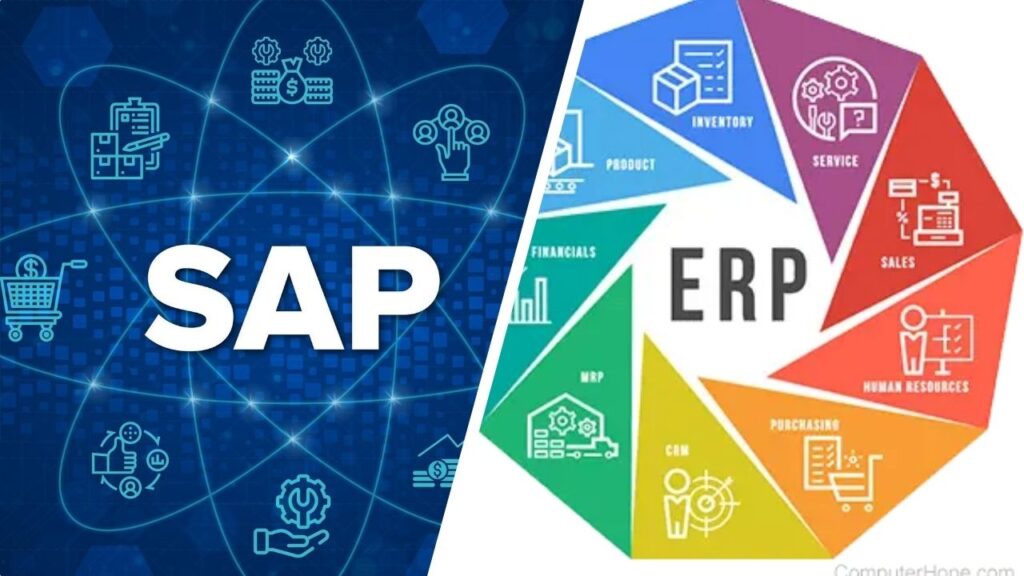
The terms SAP and ERP are often used together, but they are not the same. Understanding the difference between the two is essential for organisations planning to automate and manage their operations efficiently.
What is ERP (Enterprise Resource Planning)?
ERP (Enterprise Resource Planning) is a type of business management software that integrates all major business functions—such as accounting, finance, HR, inventory, production, and supply chain—into one centralised system.
It helps organisations streamline processes, improve efficiency, and make better decisions through real-time data sharing.
ERP systems are designed for different business categories, such as:
- Manufacturing ERP – for production-based industries
- Trading ERP – for trading and distribution businesses
- Dairy ERP – for dairy and food industries
- Construction ERP, Retail ERP, and many more
What is SAP (Systems, Applications, and Products in Data Processing)?
SAP is a global brand that develops ERP software to help businesses manage their applications and operations.
SAP provides ERP solutions that can be customized for almost every business category — including manufacturing, trading, finance, healthcare, logistics, and more.
It is one of the largest ERP software providers in the world, known for its products such as SAP S/4HANA, SAP Business One, and SAP ERP Central Component (ECC).
10 Key Differences Between SAP and ERP
| No. | Enterprise Resource Planning (ERP) | System Application Products (SAP) |
| 1. Definition | ERP is a type of software system designed to manage and integrate all core business processes. | SAP is a multinational corporation (the brand) that creates and sells ERP software solutions. |
| 2. Scope & Relation | ERP is considered the superset or broader category that encompasses all similar management software. | SAP is a subset or specific example of an ERP system. |
| 3. Focus | The primary focus is on integrating all services and managing the organization’s growth. | The focus is on developing specific software products that cater to both the customers’ and the organization’s needs. |
| 4. Industry Applicability | Different ERP solutions exist for specific industries (e.g., Manufacturing ERP, Dairy ERP, Trading ERP). | SAP, as a single brand, offers ERP solutions for virtually every category of business. |
| 5. System Structure | It is a centralized system designed to streamline the flow of all processes and information across the entire organization. | It groups processes into specific modules (e.g., Finance, HR, Logistics) that interact with different business aspects. |
| 6. Development Status | It is a generic term for any software that integrates resources; it’s the concept itself. | SAP is known as a tech-giant and the developer responsible for creating the specific software. |
| 7. Access Model | ERP applications are generally designed to be web-based and accessible through various interfaces. | SAP provides a variety of deployment options (on-premise, cloud, hybrid) depending on customer requirements. |
| 8. Core Function | Used to manage resources and monitor the overall growth of the organization. | Used to integrate core business processes across various functions concerning the specific SAP module. |
| 9. Day-to-Day Use | Aims to ease an organization’s day-to-day functions, from logistics to managerial tasks. | Provides a platform to consolidate every function to ensure optimal performance and process execution. |
| 10. Examples | Oracle ERP Cloud, NetSuite ERP, Microsoft Dynamics 365, and Scoro are examples of ERP systems. | SAP S/4HANA, SAP Business One, and SAP Business Intelligence are specific product examples from the SAP company. |
Conclusion:
ERP is the software concept, while SAP is the company that makes ERP software. ERP solutions can come from various SMEs, but SAP stands out as one of the most comprehensive, powerful, and scalable ERP providers in the world.
SAP ERP solutions are used by millions of businesses globally to manage finance, operations, human resources, logistics, and supply chains — all from a single integrated system.

The oil and lubricants industry is one of the fastest-evolving sectors, driven by increasing demand, global trade, and constant product innovation. From managing bulk raw materials to ensuring strict compliance and handling widespread distribution networks, oil and lubricant companies face unique operational challenges every single day.
In such a dynamic environment, relying on outdated systems or manual processes can slow growth, increase errors, and lead to inefficiencies. This is where SAP Business One ERP comes in as a game-changer. Specifically designed for small and mid-sized enterprises (SMEs), SAP Business One empowers oil and lubricant businesses to achieve operational excellence, improve visibility, and scale seamlessly.
In this blog, we’ll explore why SAP Business One ERP is essential for the oil & lubricants industry, the benefits it brings, and how Triz Technologies can help you successfully implement it.
Challenges in the Oil & Lubricants Industry
Before diving into the solution, let’s take a quick look at the pressing challenges faced by businesses in this sector:
- Complex Supply Chain: Multiple vendors, distributors, and dealers make coordination difficult.
- Inventory Management Issues: Bulk storage, varying product batches, and wastage tracking require precision.
- Compliance & Taxation: Strict industry regulations, GST, TDS, TCS, and global compliance standards add complexity.
- Distribution Management: Wide dealer networks and large-scale sales require streamlined tracking.
- Quality Control: Maintaining consistency and quality across batches is critical.
- Manual Processes: Dependency on spreadsheets and legacy systems results in inefficiency and errors.
To address these challenges, oil and lubricant companies need an ERP system that integrates every business function into a single, smart platform.
Why Choose SAP Business One ERP?
SAP Business One ERP provides an all-in-one solution that brings finance, inventory, production, distribution, compliance, and customer management under one roof. It not only automates processes but also provides real-time insights, enabling businesses to make faster and smarter decisions.
Here’s how SAP Business One transforms operations in the oil and lubricants industry:
- Streamlined Operations
With SAP Business One, all your business functions are connected—from procurement and production to sales and finance. This eliminates duplication of efforts and reduces downtime.
- Better Inventory & Warehouse Management
ERP makes it easier to manage bulk inventories, warehouses across multiple locations, and even advanced features like barcoding and scanning for quick stock updates.
- Efficient Financial Management
With built-in tools for accounting, billing, TDS, TCS, GST, and e-invoicing, SAP Business One ensures that your finances are accurate, compliant, and transparent.
- Enhanced Reporting & Analytics
Real-time dashboards and detailed reports give you a complete picture of business performance, helping you forecast demand and optimize production.
- Stronger Customer & Dealer Relationships
With integrated CRM and marketing tools, oil and lubricant companies can engage dealers, vendors, and customers effectively, strengthening market presence.
- Simplified Production & Quality Control
Whether it’s batch production or sub-contracting, ERP ensures accurate planning, monitoring, and quality checks—delivering consistent product quality.
- Mobility & Cloud Flexibility
SAP Business One can be deployed on-premise or on the cloud, giving you the flexibility to access critical business data anytime, anywhere.
Key SAP Business One Modules for Oil & Lubricants
Here are some of the most impactful modules oil and lubricant businesses can leverage:
- Accounting & Financials: Complete financial automation including invoicing, GST, and compliance.
- Sales & Distribution: Track dealer networks, orders, and deliveries seamlessly.
- Inventory & Warehousing: Advanced stock control with barcoding, batch tracking, and warehouse visibility.
- CRM & Marketing: Strengthen relationships with vendors, dealers, and customers.
- Batch Production & MRP: Plan, monitor, and control production cycles efficiently.
- Quality Control/Assurance: Ensure every batch meets strict industry standards.
- Import & Export Management: Simplify global trade operations with built-in compliance.
- Plant & Maintenance: Schedule preventive maintenance and reduce equipment downtime.
- Mobility & Analytics: Access real-time dashboards for quick decision-making.
Why Choose Triz Technologies?
At Triz Technologies, we specialize in implementing SAP Business One ERP tailored to the needs of the oil & lubricants industry. Our expertise ensures smooth deployment, customization, and support so that your business gains maximum value.
Here’s how we work with you:
- Initial Assessment – We evaluate your business processes and identify key gaps.
- Planning – We design a tailored ERP roadmap that addresses your specific needs.
- Implementation – Seamless integration of SAP Business One into your operations.
- Testing – Rigorous testing for performance, compliance, and error handling.
- Go-Live & Support – Continuous support post-implementation to ensure long-term success.
With our solutions, you’ll be able to manage production, distribution, compliance, and customer relationships under one unified system.
Conclusion
In today’s competitive market, oil and lubricant companies cannot afford to rely on manual systems or fragmented software. To stay ahead, you need a robust ERP system like SAP Business One that unifies operations, reduces costs, and boosts profitability.
By partnering with Triz Technologies, you can unlock the true potential of your business with a future-ready ERP tailored to your industry needs.
